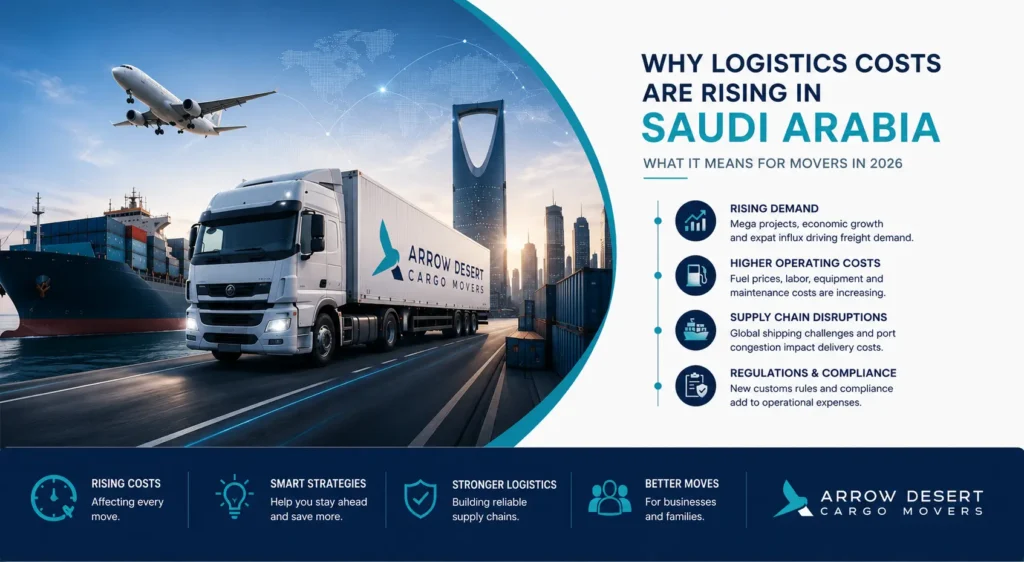
Understanding the Rising Logistics Costs in Saudi Arabia
- Moving companies
- Freight forwarding businesses
- Expats planning relocation
- Businesses managing cargo transportation
- Customers planning international shipping
Saudi Arabia’s Logistics Market Is Expanding Rapidly
Saudi Arabia is transforming into one of the world’s largest logistics and transportation hubs under Saudi Vision 2030.
Market Growth Snapshot:
$28.7B estimated freight market size in 2026
5.69% projected annual market growth
$37.8B projected market value by 2031
Major investment in ports, airports, and logistics infrastructure
Mega-projects such as:
NEOM
King Salman International Airport
Logistics zones across Riyadh and Jeddah
are dramatically increasing freight movement and relocation demand throughout the Kingdom.
While this growth creates opportunities for logistics providers, it also contributes to rising logistics costs in Saudi Arabia.
1. Strait of Hormuz Disruption Is Increasing Freight Costs
- Shipping bottlenecks
- Port congestion
- Longer delivery schedules
- Higher transportation expenses
- Higher sea freight rates
- Increased trucking demand
- Longer cargo transit times
2. Fuel, Labour, and Fleet Costs Are Rising
- Higher fleet maintenance costs
- Increased labor expenses
- Driver shortages
- Equipment rental inflation
- Freight trucks
- Moving vehicles
- Commercial transport fleets
3. Infrastructure Expansion Is Increasing Logistics Demand
Saudi Arabia’s infrastructure boom is creating enormous freight demand across the country.
Major logistics corridors between:
-
Riyadh
-
Jeddah
-
Dammam
-
NEOM
are experiencing significantly higher freight traffic.
Large-scale projects include:
-
Smart logistics zones
-
Port modernization
-
New feeder road networks
-
Airport cargo expansion
These investments improve long-term logistics efficiency, but in the short term they increase:
-
Truck demand
-
Transport congestion
-
Freight pricing
-
Warehouse utilization
This directly impacts relocation businesses competing for logistics capacity.
4. Rising Housing Costs Are Increasing Relocation Pressure
Relocation demand remains strong because Saudi Arabia continues attracting:
Expats
Skilled professionals
Corporate employees
Project-based workforce movement
However, rising housing costs in Riyadh and other major cities are creating tighter relocation budgets for customers.
This affects:
International relocation planning
Corporate relocation packages
Household moving budgets
Storage demand
International moving costs now vary significantly depending on:
Destination
Shipment volume
Freight method
Customs requirements
As a result, customers are becoming more cost-conscious while logistics expenses continue rising.
5. Cold Chain & Specialized Logistics Costs Are Increasing
- Temperature-controlled freight
- Pharmaceutical transportation
- Artwork relocation
- High-value cargo movement
6. Customs & Regulatory Changes Are Increasing Operational Costs
Saudi Arabia’s logistics industry is undergoing rapid regulatory modernization.
Key Developments Include:
Digital customs systems
ZATCA compliance reforms
Cross-border customs integration
Authorized Economic Operator programs
These improvements strengthen long-term logistics efficiency, but businesses are currently absorbing:
Compliance costs
Documentation expenses
Administrative workload
System adaptation investments
For smaller moving companies, customs expertise is becoming increasingly important.
What Rising Logistics Costs Mean for Movers in 2026
▲ Fuel Surcharges Are Becoming Common
Many movers now include transparent fuel surcharges in quotations because transportation expenses continue increasing steadily.
▲ Skilled Labor Is Harder to Retain
Experienced movers, drivers, and logistics coordinators are increasingly being recruited into Vision 2030 mega-projects.
This raises:
Staff retention costs
Recruitment expenses
Operational overhead
▶ Expat Relocation Demand Remains Strong
Saudi Arabia’s growing expat population continues driving:
Residential relocation
Corporate moving services
International freight demand
This remains one of the strongest growth sectors for moving companies.
▶ Sea Freight Delays Are Affecting International Relocation
Sea freight forwarding remains essential for:
International household moving
Commercial cargo transportation
Large shipment relocation
However, congestion and routing disruptions are increasing:
Delivery timelines
Port handling costs
Freight pricing
Moving companies now need longer lead times for international shipping.
▲ Warehousing Costs Are Increasing
Warehousing and storage services in Saudi Arabia are becoming more expensive because of:
Increased logistics demand
Smart storage systems
Climate-controlled facilities
Higher operational standards
Storage-related pricing is rising across Riyadh, Jeddah, and Dammam.
✓ Technology Adoption Is Becoming Essential
AI logistics systems, route optimization software, and smart freight tracking are helping logistics providers:
Reduce fuel waste
Improve route planning
Optimize truck utilization
Lower operational inefficiencies
Companies investing in logistics technology are adapting more effectively to rising costs.
How Movers Can Adapt to Rising Logistics Costs in Saudi Arabia
Use Dynamic Pricing Models
Static pricing structures no longer work effectively in volatile freight markets.
Moving companies should account for:
Fuel fluctuations
Seasonal demand
Port congestion
Freight surcharges
Diversify Freight and Transport Options
Using multiple logistics methods provides flexibility during disruptions.
This includes:
Land freight
Sea freight
Multimodal transportation
Focus on Corporate & Expat Relocation
Corporate relocation remains one of the most stable and profitable logistics sectors in Saudi Arabia.
Encourage Early Booking
Peak seasons continue creating:
Higher pricing
Limited truck availability
Delayed scheduling
Early booking improves operational planning and cost efficiency.
Strengthen Customs Expertise
What the Future Looks Like Beyond 2026
Saudi Arabia’s logistics sector will continue growing rapidly over the next decade.
Expected Trends:
Continued infrastructure investment
Faster digital customs systems
Increased automation
Higher freight efficiency
Stronger GCC connectivity
However:
Logistics services will likely become more efficient, but not necessarily cheaper.
Rising demand and operational complexity will continue influencing logistics costs in Saudi Arabia.
Final Thoughts
- Freight demand growth
- Fuel and labor expenses
- Infrastructure expansion
- Regulatory modernization
- Shipping disruptions
- Vision 2030 mega-project development
- Better planning
- Accurate pricing
- Operational efficiency
- Long-term growth
FAQs
Why are logistics costs increasing in Saudi Arabia?
Logistics costs in Saudi Arabia are increasing because of rising fuel prices, freight demand, infrastructure expansion, labor expenses, and customs modernization investments.
Are moving costs increasing in Saudi Arabia in 2026?
Yes. Household relocation, freight transportation, warehousing, and international moving services are all experiencing gradual cost increases in 2026.
Which freight method is becoming most expensive?
Air freight remains the most expensive shipping option because of fuel prices and demand for urgent delivery services.
How can customers reduce relocation costs?
- Booking early
- Choosing the right freight method
- Reducing shipment volume
- Working with experienced movers
Ready to Plan Your Move or Shipment?
- Professional movers in Saudi Arabia
- International relocation services
- Air, sea, and land freight solutions
- Customs clearance support
- Secure packing and storage services