HomeBlogUncategorizedSurviving a Summer Move: How to Relocate Safely in Jeddah’s Peak Heat

Surviving a Summer Move: How to Relocate Safely in Jeddah’s Peak Heat

Summer Moves in Jeddah

Jeddah summers don’t leave much room for error. With daytime temperatures regularly climbing past 40°C and humidity levels that make the heat feel even heavier along the coast, moving day in August or September is a very different challenge than moving in cooler months. Boxes left in a parked truck can turn into an oven. Movers working outdoors face real health risks. And certain belongings simply don’t tolerate extreme heat well.

None of that means you have to postpone your move. It means moving smart. Here’s how to relocate safely and protect both your family and your belongings when Jeddah’s heat is at its peak.

Why Summer Moves in Jeddah Need Extra Planning

Unlike drier inland cities, Jeddah’s Red Sea humidity keeps the air heavy even after sunset, so there’s little relief once the sun goes down. Direct sunlight can push the interior temperature of a parked vehicle or moving truck far higher than the outside air, and asphalt loading areas radiate additional heat back upward. For anyone spending hours outdoors during a move — whether that’s you, your family, or the moving crew — this combination raises real risks around dehydration and heat exhaustion that are worth planning around, not ignoring.

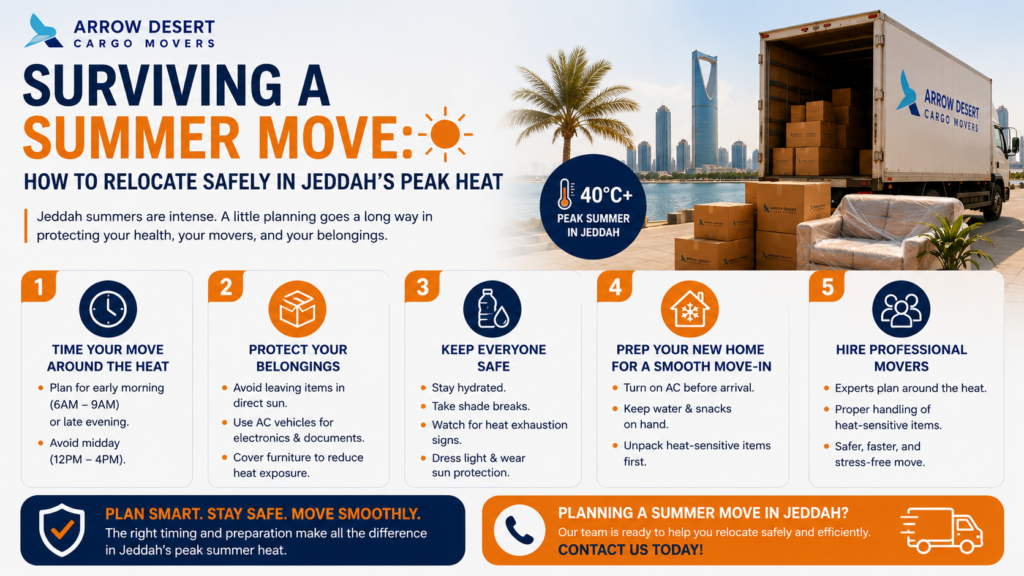
1. Time Your Move Around the Heat, Not the Calendar

●      Schedule loading and unloading for early morning, ideally between 6:00 and 9:00 AM, before temperatures peak.
 
●      If an early start isn’t possible, consider a late evening move after sunset once temperatures begin to drop.
 
●      Avoid the midday window between noon and 4:00 PM entirely wherever you can — this is when heat-related illness risk is highest

2. Protect Your Belongings From Heat Damage

Especially Heat-Sensitive items

●      Electronics: laptops, TVs, and appliances can suffer internal damage or battery swelling in extreme heat.
 
●      Candles, cosmetics, and certain skincare products: these can melt or separate.
 
●      Wooden furniture: prolonged heat exposure can cause warping, cracking, or finish damage.
 
●      Photographs and important documents: heat and humidity together accelerate damage to paper and photo prints.
How to Protect Them
●      Avoid leaving a loaded truck parked in direct sun for extended periods between pickup and drop-off.
 
●      Transport heat-sensitive electronics and documents in air-conditioned vehicles when possible, rather than the moving truck.
 
●      Use light-colored or reflective covers on furniture to reduce direct heat absorption during transit.

3. Keep Everyone Safe: Heat Safety Basics for Moving Day

1. Stay hydrated before you’re thirsty. Have water available and drink consistently throughout the day, not just when you feel thirsty.
 
2. Take shade breaks. Even 5-10 minutes out of direct sun every hour helps prevent heat exhaustion during heavy lifting.
 
3. Watch for warning signs. Dizziness, nausea, excessive sweating or a sudden stop in sweating, and confusion can all signal heat exhaustion or heat stroke — treat these seriously and move to a cool area immediately.
 
4. Dress appropriately. Light-colored, loose, breathable clothing helps regulate body temperature better than dark or tight-fitting fabrics.
 
5. Don’t skip sun protection. Sunscreen and a hat matter even during short outdoor stretches when the sun is this intense.

4. Prep Your New Home for a Smooth, Cool Move-In

●      Turn on the air conditioning at your new home a few hours before arrival so it’s already cool when boxes start coming in.
 
●      Keep a cooler with cold water and snacks on hand for moving day rather than relying on finding shops mid-move.
 
●      Unpack heat-sensitive items first, so anything vulnerable spends the least time possible sitting in a hot vehicle or entryway.

5. Why Hiring Professional Movers Matters More in Summer

A DIY move is harder to pull off safely once the heat sets in — coordinating timing, transport, and breaks on your own adds risk on top of the usual moving-day stress. Professional moving crews are used to working around Jeddah’s climate: they know how to pace loading and unloading, when to schedule around peak heat, and how to handle heat-sensitive items properly in transit. That experience matters most exactly when conditions are toughest.

A summer move in Jeddah doesn’t have to mean risking your health or your belongings. With the right timing — early morning or evening loading, shaded breaks, and proper hydration — plus a few precautions for heat-sensitive items, you can relocate safely even during the hottest stretch of the year. The key is planning around the heat rather than hoping it won’t be a factor.
 
At Arrow Desert Cargo Movers, our team has years of experience handling moves in Jeddah’s peak heat, from early-morning scheduling to proper handling of temperature-sensitive belongings. If you’re planning a move this summer, get in touch with our team for a relocation plan built around Jeddah’s climate, not against it.