If you’ve never worked with a freight forwarder before, the process can seem like a black box: you hand off your cargo, and somehow it ends up cleared, delivered, and invoiced weeks later. For businesses shipping through Jeddah — one of the busiest ports in the Middle East — understanding what actually happens in between makes a real difference in avoiding delays, unexpected costs, and customs headaches.
Here’s a practical, local breakdown of how freight forwarding works in Jeddah, from booking to final delivery.
What a Freight Forwarder Actually Does
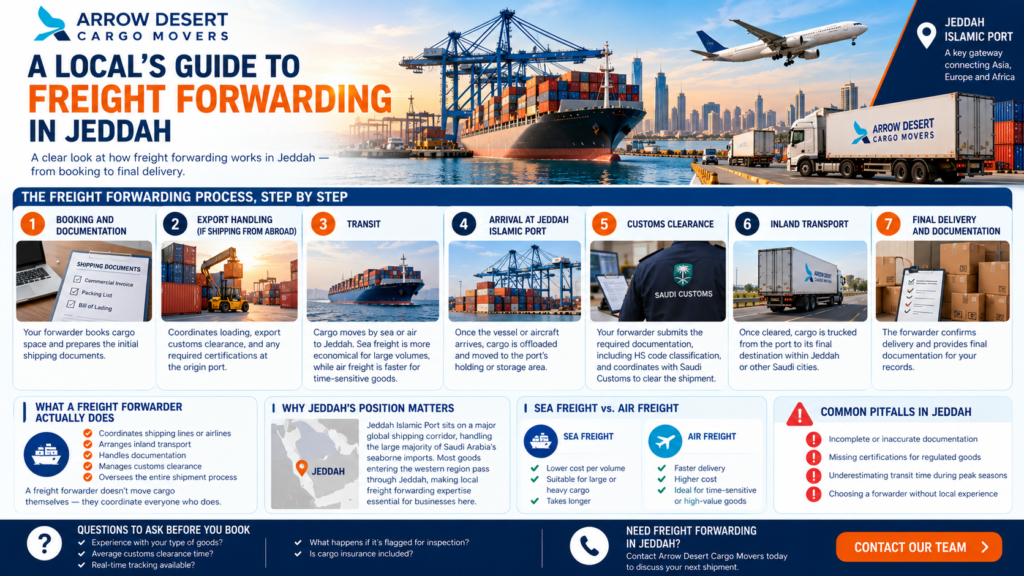
A freight forwarder doesn’t move cargo themselves — they coordinate everyone who does. That includes booking space with shipping lines or airlines, arranging trucking on both ends, handling documentation, and managing customs clearance. Think of them as the project manager of your shipment, responsible for getting cargo from origin to destination smoothly, even when multiple companies are involved along the way.
Why Jeddah's Position Matters
Jeddah Islamic Port sits on one of the world’s busiest East-West shipping corridors, connecting Asia, Europe, and Africa through the Red Sea. It handles the large majority of Saudi Arabia’s seaborne imports, which means most goods entering the western region of the Kingdom pass through Jeddah at some point — making local freight forwarding expertise especially valuable for businesses based here.
The Freight Forwarding Process, Step by Step
- Booking and documentation. Your forwarder books cargo space and prepares initial shipping documents, including the commercial invoice, packing list, and bill of lading (the legal document confirming receipt of goods for shipment).
- Export handling (if shipping from abroad). At the origin port, the forwarder coordinates loading, export customs clearance, and any required certifications before the vessel or aircraft departs.
- Transit. Cargo moves by sea or air to Jeddah. Sea freight is more economical for large volumes but takes longer; air freight costs more but moves significantly faster — your forwarder should help you weigh this tradeoff based on your shipment’s urgency and value.
- Arrival at Jeddah Islamic Port. Once the vessel or aircraft arrives, cargo is offloaded and moved into the port’s holding or storage area pending customs clearance.
- Customs clearance. This is often the step where delays happen. Your forwarder submits the required documentation, including HS code classification, and coordinates with Saudi Customs to clear the shipment. Accurate paperwork here is the single biggest factor in how quickly cargo moves through this stage.
- Inland transport. Once cleared, cargo is trucked from the port to its final destination, whether that’s a warehouse, retail location, or business address within Jeddah or onward to another Saudi city.
- Final delivery and documentation handoff. The forwarder confirms delivery and provides final documentation for your records, including proof of customs clearance and delivery confirmation.
Common Pitfalls That Slow Shipments Down in Jeddah
- Incomplete or inaccurate documentation, especially incorrect HS code classification, which can trigger customs holds.
- Missing certifications for regulated goods, such as food, cosmetics, or pharmaceuticals requiring SFDA approval.
- Underestimating transit time during peak shipping seasons, when port congestion can extend clearance timelines.
- Choosing a forwarder without direct experience in your specific product category, which often means slower problem-solving when something unexpected comes up.
Sea Freight vs. Air Freight: Which Should You Choose?
For most routine commercial shipments, sea freight through Jeddah Islamic Port offers the better cost-per-volume value, especially for larger or heavier cargo. Air freight makes sense when speed matters more than cost — time-sensitive goods, high-value items, or urgent restocking needs. A good local forwarder will walk you through this tradeoff honestly rather than defaulting to whichever option is easiest for them to arrange.
Questions to Ask a Jeddah Freight Forwarder Before You Book
- Do you have direct experience shipping my specific type of goods?
- What’s your average customs clearance time for shipments through Jeddah?
- Can you provide real-time tracking once cargo arrives at the port?
- What happens if my shipment is flagged for additional customs inspection?
- Is cargo insurance included, or is it a separate cost I need to arrange?
Understanding how freight forwarding in Jeddah actually works — from booking through customs clearance to final delivery — puts you in a much stronger position to avoid delays and unnecessary costs. Given Jeddah’s role as one of the Kingdom’s busiest ports, working with a freight forwarder who genuinely understands the local port, customs process, and inland transport network makes a measurable difference in how smoothly your cargo moves.
At Arrow Desert Cargo Movers, we handle freight forwarding and cargo services with direct, on-the-ground knowledge of Jeddah’s port and customs process. Contact our team today to talk through your next shipment, whether it’s arriving by sea or air.