Understanding Shipping, Moving, and Freight Cost Trends in 2026
Logistics costs are one of the biggest concerns for individuals and businesses planning relocation or cargo shipping. Understanding logistics costs 2026 is essential for making informed shipping and moving decisions. A common question in 2026 is:
Are logistics costs going up or down?
The answer is becoming clearer – logistics costs are generally increasing across most transport modes, driven by global demand, operational pressures, and regional growth, especially in fast-developing markets like Saudi Arabia.
In this guide, we break down the latest logistics cost trends in 2026, what’s driving these increases, and how you can manage your moving and shipping expenses effectively.
Why Logistics Costs Are Increasing in 2026
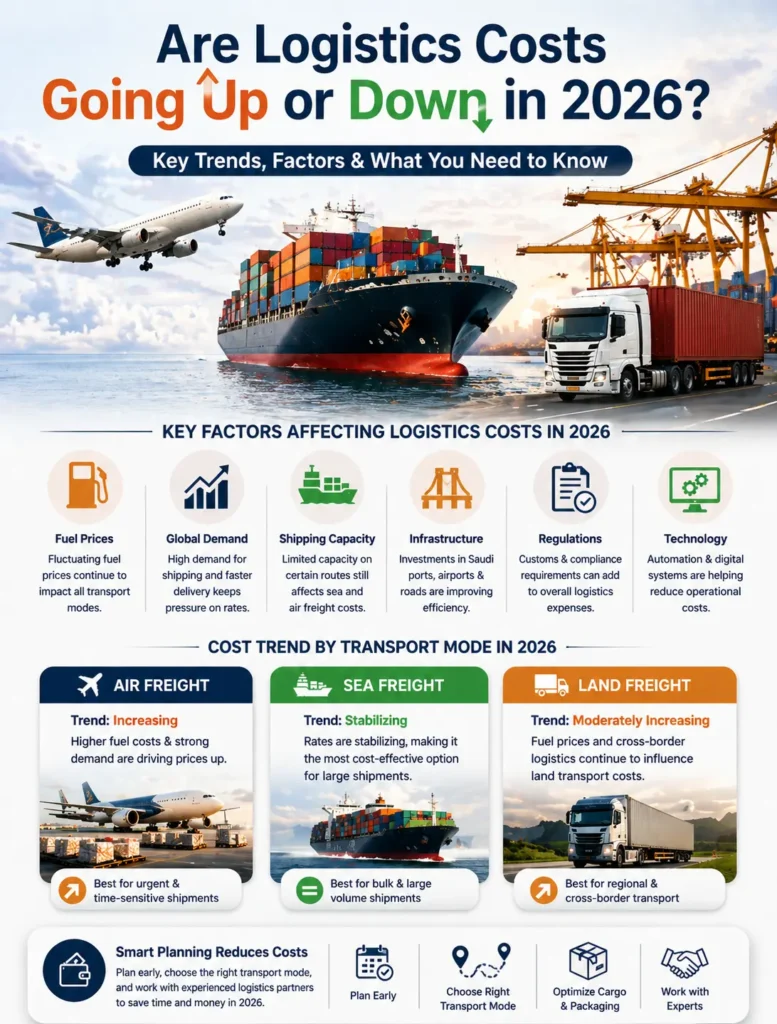
When analysing logistics costs 2026, pricing is influenced by multiple variables, including:
- Fuel prices
- Global trade demand
- Shipping capacity constraints
- Infrastructure expansion costs
- Government regulations
- Technology investments
In Saudi Arabia, initiatives under Saudi Vision 2030 are accelerating logistics growth — but also increasing short-term operational costs.
1. Are Logistics Costs Increasing in 2026?
Short Answer: Yes
Most logistics segments are experiencing consistent cost increases due to:
- Rising Fuel Prices
Fuel remains a primary cost driver across air, sea, and land transport.
- Labor & Operational Costs
Warehousing, manpower, and logistics operations are becoming more expensive.
- Increased Demand for Speed
Higher demand for faster delivery pushes reliance on premium shipping options.
2. Why Costs Are Not Decreasing Anymore
Earlier trends suggested stabilisation, but in 2026:
- Infrastructure Expansion Costs
Upgrades at ports like Jeddah Islamic Port improve efficiency but increase service pricing.
- Digital Transformation Investment
Systems introduced by Zakat, Tax and Customs Authority improve speed, but add operational overhead.
- High Logistics Demand in Saudi Arabia
Rapid growth is increasing pressure on supply chains.
3. Cost Trends by Freight Type (2026)
Air Freight Costs
Increasing significantly
Driven by fuel prices and urgency demand
Best for time-sensitive shipments
- Air freight remains the fastest but most expensive option.
Sea Freight Costs
Increasing steadily
Affected by global shipping demand and port operations
Still relatively economical compared to air freight
- Ideal for large shipments, but no longer “low-cost” as before.
Land Freight Costs
Increasing consistently
Influenced by fuel prices, tolls, and cross-border logistics
- Best for GCC relocation, but costs are rising with regional demand.
4. Key Factors Driving Logistics Costs in Saudi Arabia
- Vision 2030 Infrastructure Expansion
Improves long-term efficiency but increases short-term costs
- E-Commerce Growth
Higher demand leads to increased logistics pricing
- Global Supply Chain Pressure
Impacts freight availability and rates
- Technology & Automation
Improves systems but adds investment costs
5. How Logistics Costs Impact Moving Services
If you’re planning relocation, increasing logistics costs will affect:
- International moving charges
- Packing and handling costs
- Freight rates (air, sea, land)
- Storage and warehousing fees
This makes choosing the right freight forwarding partner in Saudi Arabia more important than ever.
6. How to Manage Increasing Logistics Costs
Managing logistics costs 2026 starts with careful planning and selecting the right shipping strategy.
- Plan Early
Avoid premium last-minute pricing
- Choose the Right Transport Mode
Air → Fast but expensive
Sea → Cost-efficient but rising
Land → Balanced but increasing
- Optimize Shipment Volume
Reduce unnecessary items
- Work with Professionals
Experienced movers optimize routes and cost
- Bundle Services
Integrated logistics solutions reduce total expense
7. Hidden Costs You Should Watch Out For
Even with rising base costs, hidden charges can increase total spend:
- Customs duties and taxes
- Storage fees
- Packaging upgrades
- Delivery delays
Working with professional customs clearance services in KSA helps minimise these risks.
8. Future Outlook: Logistics Costs Beyond 2026
Looking ahead:
- Costs will likely continue increasing gradually
- Efficiency improvements will offset (but not reduce) prices
- Sustainability initiatives may add additional costs
- Demand-driven pricing will remain dominant
Logistics will become more efficient, but not cheaper.
What This Means for Customers
- Logistics costs are increasing across all freight types
- Early planning is essential to control expenses
- Choosing the right logistics partner is critical
- Cost optimization is now strategy-driven, not price-driven
Final Thoughts
So, are logistics costs going up or down in 2026?
The answer is clear:
Logistics costs are increasing across air, sea, and land freight.
For customers in Saudi Arabia, success depends on:
- Smart planning
- Efficient logistics choices
- Working with experienced logistics service providers
Ready to Optimize Your Moving or Shipping Costs?
Looking for:
- Cost-effective moving solutions
- Reliable freight services
- Air, sea, and land transport options
- Customs clearance support
- End-to-end logistics services
Contact ADC Cargo Moving today for a customised and cost-efficient logistics plan.